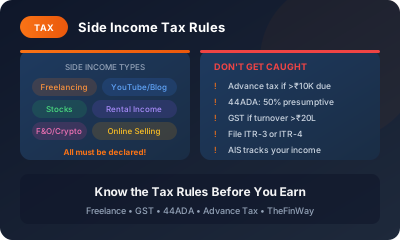
Side Income Tax Rules in India — Freelancing, Gig Work & Investments
More Indians than ever have side income — freelancing, content creation, stock trading, rental income, or selling products online. But many don't know they must declare this income and pay tax on it. Undeclared side income can trigger notices, penalties and scrutiny from the Income Tax Department.
Types of Side Income and How They're Taxed
| Income Type | Tax Treatment | Key Rules |
|---|---|---|
| Freelancing / Consulting | Business income (slab rate) | Deduct expenses, file ITR-3/4 |
| YouTube / Content Creation | Business income (slab rate) | Can claim equipment, internet as expenses |
| Rental Income | Income from House Property | 30% standard deduction on rent received |
| Stock Trading (Delivery) | Capital gains | STCG 20%, LTCG 12.5% above ₹1.25L |
| F&O / Intraday Trading | Business income | Must file ITR-3, audit if turnover > ₹10 Cr |
| Fixed Deposit Interest | Income from Other Sources | Added to salary, taxed at slab rate |
| Selling Products Online | Business income | GST required if turnover > ₹20L |
| Crypto Gains | 30% flat tax | No deductions allowed except purchase cost |
Freelancing Tax Guide
If you freelance alongside your job, your freelancing income is "Profits and Gains from Business or Profession." You can either:
- Section 44ADA (Presumptive) — If gross receipts are under ₹75 lakh (with digital payments), declare 50% as profit and pay tax on that. No need to maintain books of accounts. Simple and recommended for most freelancers
- Regular accounting — Maintain books, claim actual expenses (laptop, internet, software, co-working), and pay tax on net profit. Better if your actual expenses exceed 50%
Example: Rahul earns ₹6 lakh from freelancing. Under 44ADA, taxable income is ₹3 lakh (50%). If his salary already covers the basic exemption limit, he pays approximately ₹62,400 in additional tax on this income.
Advance Tax: Don't Get Caught
If your total tax liability (after TDS) exceeds ₹10,000 in a financial year, you must pay advance tax in quarterly instalments:
- 15% by June 15
- 45% by September 15
- 75% by December 15
- 100% by March 15
Missing advance tax deadlines means paying interest under Section 234B and 234C — typically 1% per month. Set calendar reminders.
GST for Side Income
- Not needed if total annual turnover (services) is under ₹20 lakh (₹10 lakh for special category states)
- Required if earning from exports (including foreign freelancing clients on Upwork, Fiverr) — but export of services is zero-rated (0% GST)
- Composition scheme available for small businesses with turnover under ₹1.5 crore — pay flat 1-6% GST
Common Mistakes to Avoid
- Not declaring side income — the IT department can see your bank transactions via Annual Information Statement (AIS)
- Mixing personal and business accounts — keep a separate bank account for side income
- Not saving for taxes — set aside 30% of every side income payment for taxes
- Ignoring TDS — clients may deduct TDS (10% under 194J). Claim it when filing returns
- Wrong ITR form — salaried with side income need ITR-3 or ITR-4, not ITR-1
Track All Your Income Sources
When you have multiple income streams, tracking becomes essential. Use TheFinWay's expense tracker to monitor your side income alongside your salary, and ensure you're setting aside enough for taxes and investments.
Start Your Financial Journey
TheFinWay helps you track net worth, budget expenses, plan retirement and achieve financial independence — all for free.
Try TheFinWay Free →