Types of Mutual Funds in India — Explained Simply
Mutual funds pool money from thousands of investors and invest it in stocks, bonds, or both. With over 2,500 mutual fund schemes in India, understanding the categories helps in making informed choices.
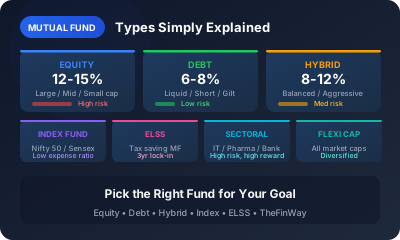
Equity Mutual Funds
These invest primarily in stocks. Higher potential returns over the long term but with higher short-term volatility.
- Large cap funds — invest in top 100 companies by market cap (TCS, Reliance, HDFC Bank). Relatively stable among equity funds
- Mid cap funds — invest in companies ranked 101-250. Higher growth potential with moderate volatility
- Small cap funds — invest in companies ranked 251+. Highest growth potential but also highest volatility
- Multi cap / Flexi cap — invest across large, mid and small caps. The fund manager decides the allocation
- Sectoral / Thematic — focus on specific sectors like IT, pharma, banking. High concentration risk
- ELSS (Tax saver) — equity funds with 3-year lock-in, eligible for Section 80C deduction
Debt Mutual Funds
These invest in government bonds, corporate bonds, treasury bills and other fixed-income instruments. Lower returns than equity but significantly more stable.
- Liquid funds — invest in instruments maturing within 91 days. Used as an alternative to savings accounts
- Short duration funds — invest in bonds maturing in 1-3 years
- Corporate bond funds — invest in high-quality corporate bonds
- Gilt funds — invest only in government securities (zero credit risk)
- Dynamic bond funds — adjust portfolio based on interest rate expectations
Hybrid Mutual Funds
These invest in both equity and debt, offering a balance of growth and stability.
- Conservative hybrid — 75-90% in debt, 10-25% in equity
- Balanced advantage / Dynamic asset allocation — automatically shifts between equity and debt based on market conditions
- Aggressive hybrid — 65-80% in equity, 20-35% in debt
Index Funds & ETFs
These passively track a market index like Nifty 50 or Sensex. Key advantages:
- Very low expense ratios (0.1-0.3% vs 1-2% for active funds)
- No fund manager bias — returns mirror the index
- Historically, most active funds fail to beat their benchmark over 10+ years
- Popular choices: Nifty 50 index fund, Nifty Next 50, Nifty 500
How to Choose
The right type depends on your time horizon and comfort with volatility:
| Time Horizon | Fund Types to Explore |
|---|---|
| Less than 1 year | Liquid funds, overnight funds |
| 1-3 years | Short duration, corporate bond funds |
| 3-5 years | Balanced advantage, conservative hybrid |
| 5-7 years | Large cap, flexi cap, index funds |
| 7+ years | Mid cap, small cap, multi cap |
Track Your Mutual Fund Portfolio
Once you've started investing, track your portfolio performance with TheFinWay's portfolio tracker. See how your mutual fund investments contribute to your total net worth over time.
Start Your Financial Journey
TheFinWay helps you track net worth, budget expenses, plan retirement and achieve financial independence — all for free.
Try TheFinWay Free →