Joint Finance Management for Couples in India — A Complete Guide
Money is one of the top sources of conflict in Indian relationships. Whether you're newly married or have been together for years, having a clear system for managing finances together makes everything easier. Here's a practical guide.
Three Approaches to Couple Finances
1. Fully Joint: All income goes into one pool. All expenses, savings and investments are shared. Works best when one partner manages money well and both trust each other completely.
2. Fully Separate: Each person manages their own money. Split shared expenses 50/50 or proportional to income. Works when both partners are financially independent and prefer autonomy.
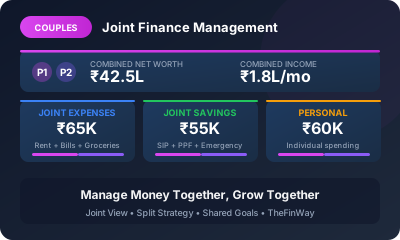
3. Hybrid (Most Common): Joint account for shared expenses (rent, groceries, EMIs, kids) + individual accounts for personal spending. Contribute proportionally to income. Best of both worlds.
Setting Up the Hybrid System
- Step 1: Calculate total shared monthly expenses (rent, utilities, groceries, EMIs, kids, insurance)
- Step 2: Contribute proportionally. If Partner A earns ₹80K and Partner B earns ₹40K (ratio 2:1), Partner A contributes 2/3 and Partner B contributes 1/3
- Step 3: Joint savings goals (emergency fund, vacation, home down payment) — each contributes their share
- Step 4: Remaining salary stays in individual accounts for personal spending — no questions asked
Shared Financial Goals to Discuss
- Emergency fund target
- Home purchase timeline and down payment savings
- Children's education fund
- Retirement planning for both partners
- Insurance coverage (health, life, term)
- Vacation/lifestyle budget
Important Legal and Financial Steps
- Nominations: Update bank accounts, FDs, MFs, insurance with spouse as nominee
- Will: Create a basic will — especially if you have property or dependents
- Joint health insurance: Family floater plan is cheaper than two individual policies
- Credit score: Maintain individual credit scores — avoid being co-applicant unless necessary
How to Talk About Money
Have a monthly "money date" — 30 minutes to review shared expenses, check progress on goals and discuss upcoming big expenses. Keep it judgment-free. Use data (not feelings) to guide decisions.
Track your shared finances side by side with TheFinWay's Joint View feature — see combined net worth, shared goals and individual contributions in one dashboard.
Start Your Financial Journey
TheFinWay helps you track net worth, budget expenses, plan retirement and achieve financial independence — all for free.
Try TheFinWay Free →