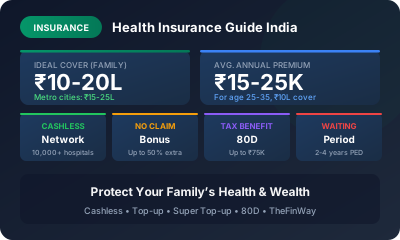
Health Insurance in India — A Complete Guide for 2026
Medical inflation in India runs at 14% per year — double the general inflation rate. A hospital stay that costs ₹3 lakh today could cost ₹6 lakh in just 5 years. Health insurance is one of the most important financial tools for Indian families.
Types of Health Insurance Plans
Here are the main types of health insurance available in India:
- Individual plans — cover a single person with a dedicated sum insured
- Family floater plans — a shared sum insured for the entire family, typically more affordable than individual plans for each member
- Top-up plans — activate after a deductible threshold, useful for increasing coverage at lower premiums
- Super top-up plans — similar to top-ups but the deductible applies to aggregate claims during the year, not per claim
- Critical illness plans — lump-sum payout on diagnosis of specified illnesses like cancer, heart attack or stroke
Key Features to Understand
- Sum insured — the maximum amount the insurer pays. In metro cities, ₹10-15 lakh is common for a family of 4
- Room rent limits — many plans cap daily room charges. If your room costs more, all related expenses get proportionally reduced
- Co-payment — your share of the claim amount (e.g., 20% co-pay means you pay ₹20,000 on a ₹1 lakh claim)
- Pre-existing disease waiting period — typically 2-4 years before pre-existing conditions are covered
- No-claim bonus — sum insured increases each claim-free year, sometimes up to 100% of the base amount
- Restoration benefit — resets sum insured if exhausted during the year
How the Claim Process Works
There are two types of claims:
- Cashless claims — hospital bills are settled directly by the insurer at network hospitals. You submit your health card and the hospital handles paperwork
- Reimbursement claims — you pay the hospital, then submit bills to the insurer for refund within 15-30 days
Comparing Health Insurance Plans
When comparing plans, look beyond just the premium amount:
- Check the network hospital list in your city
- Review sub-limits on room rent, ICU charges, and specific procedures
- Understand waiting periods for pre-existing diseases
- Check if day-care procedures are covered (modern treatments under 24 hours)
- Read the exclusion list carefully — maternity, dental, and OPD may not be included
Tax Benefits
Health insurance premiums qualify for deduction under Section 80D of the Income Tax Act:
- Up to ₹25,000 for self and family (₹50,000 if any member is a senior citizen)
- Additional ₹25,000 (or ₹50,000) for parents
- Preventive health check-up of up to ₹5,000 is included within this limit
Track Your Complete Financial Picture
Health insurance is just one piece of financial planning. Use TheFinWay to track your net worth, budget, goals and overall financial health — all in one place.
Start Your Financial Journey
TheFinWay helps you track net worth, budget expenses, plan retirement and achieve financial independence — all for free.
Try TheFinWay Free →