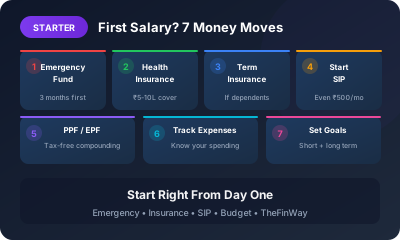
First Salary? 7 Smart Money Moves to Make Right Away
Your first salary is exciting — and it's the perfect time to build habits that can set you up financially for life. Here are 7 money moves to consider when starting your career.
1. Open a Savings Account with No Minimum Balance
If your salary account has maintenance charges, consider opening a zero-balance savings account at a digital bank. Keep your salary flowing into the primary account but route savings elsewhere. Most banks offer 3-4% interest on savings.
2. Build a Starter Emergency Fund
Before investing anywhere, set aside 1 month's expenses as an emergency buffer. Keep this in a savings account or liquid fund where you can access it instantly. Over the next 6-12 months, build this to 3-6 months of expenses.
Why? Because unexpected expenses — bike repair, medical bill, or job gap — shouldn't force you into debt or break your investment streak.
3. Get Health Insurance
If your employer provides health insurance, that's a start. But employer coverage typically ends when you switch jobs. Getting a personal health policy while you're young and healthy means lower premiums locked in for life. A ₹5 lakh individual plan can cost as little as ₹5,000-8,000/year at age 22-25.
4. Start a Small SIP
You don't need ₹10,000 to start investing. A ₹500 or ₹1,000 monthly SIP in an index fund (like a Nifty 50 index fund) gets you started. The amount matters less than the habit. You can increase the SIP amount as your income grows.
At even ₹2,000/month with 12% returns, you'd have approximately ₹20 lakh after 20 years and ₹70 lakh after 30 years.
5. Understand Your Salary Components
Your CTC (Cost to Company) is not your take-home. Learn what these components mean:
- Basic salary — forms the base for PF contribution and HRA calculation
- HRA — House Rent Allowance, partly tax-exempt if you pay rent
- EPF — 12% of basic goes to Employee Provident Fund (both you and employer contribute)
- Special allowance — fully taxable component
- Gratuity — paid after 5 years of service, part of CTC but not monthly income
6. Track Your Expenses for 3 Months
Don't set a budget yet — first, understand where your money actually goes. Track every expense for 3 months. Most people are surprised to find 15-20% of their spending goes to "I don't know where." Once you see the patterns, you can make informed adjustments.
7. Avoid Lifestyle Inflation
The biggest financial mistake young earners make: spending every rupee of every raise. When your salary increases from ₹30,000 to ₹40,000, the extra ₹10,000 could go to investments instead of a bigger phone or more frequent dining out.
A useful framework: save at least 50% of every salary increase. Enjoy the other 50% guilt-free.
Start Tracking From Day One
The earlier you start tracking, the clearer your financial picture becomes. TheFinWay lets you track net worth, expenses, and goals — so you can see your wealth grow from your very first salary.
Start Your Financial Journey
TheFinWay helps you track net worth, budget expenses, plan retirement and achieve financial independence — all for free.
Try TheFinWay Free →