How to Check and Improve Your CIBIL Score in India
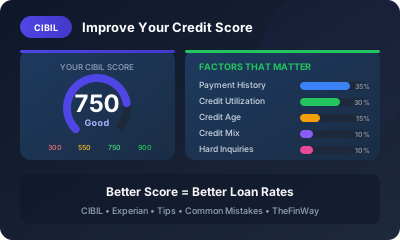
Your CIBIL score (credit score) is a 3-digit number between 300 and 900 that banks use to evaluate your creditworthiness. A score above 750 is generally considered good and can unlock better loan terms and credit card offers.
How to Check Your Score for Free
RBI mandates that credit bureaus provide one free credit report per year. You can check your score at:
- CIBIL (TransUnion) — the most widely used bureau in India
- Experian India
- CRIF High Mark
- Equifax India
Many banks and fintech apps also show your score for free on their dashboards. Checking your own score does NOT affect it — this is a "soft inquiry."
What Affects Your Score
| Factor | Impact | Weight |
|---|---|---|
| Payment history | Do you pay EMIs and credit card bills on time? | ~35% |
| Credit utilisation | How much of your credit limit do you use? | ~30% |
| Credit age | How old is your oldest credit account? | ~15% |
| Credit mix | Do you have both secured (home loan) and unsecured (credit card) credit? | ~10% |
| New credit inquiries | How many loan/card applications recently? | ~10% |
Practical Steps to Improve Your Score
1. Never Miss a Payment
Even one missed EMI or credit card payment gets reported and can drop your score by 50-100 points. Set up auto-debit for all EMIs and at least the minimum due on credit cards.
2. Keep Credit Utilisation Under 30%
If your credit card limit is ₹1 lakh, try to keep the outstanding balance under ₹30,000 at any point. High utilisation signals over-dependence on credit. If you consistently hit the limit, request a credit limit increase (this lowers utilisation without spending more).
3. Don't Close Old Credit Cards
Your oldest credit card contributes to "credit age." Closing it reduces your average credit age and total available credit limit — both hurt your score. If a card has an annual fee you don't want to pay, try downgrading to a no-fee variant.
4. Avoid Multiple Loan Applications
Each loan or credit card application triggers a "hard inquiry" on your report. Multiple inquiries in a short period suggest credit-hungry behaviour. Space out applications by at least 3-6 months.
5. Maintain a Healthy Credit Mix
Having both a credit card (unsecured) and a home or car loan (secured) shows you can manage different types of credit. But don't take on debt just to improve your mix.
6. Dispute Errors in Your Report
Check your report for errors — wrong account details, accounts you didn't open, or payments marked late that were actually on time. File disputes directly with the credit bureau; they must resolve within 30 days.
Score Ranges and What They Mean
| Score Range | Rating | Impact |
|---|---|---|
| 750-900 | Excellent | Best loan rates, instant credit card approvals |
| 700-749 | Good | Most loans approved, competitive rates |
| 650-699 | Fair | Loans possible but at higher interest rates |
| Below 650 | Poor | Loan applications likely to be rejected |
How Long Does Improvement Take?
Credit scores don't change overnight. Consistent good behaviour over 3-6 months typically shows improvement. A major negative event (like a loan default) can stay on your report for up to 7 years, though its impact reduces over time.
Financial Planning Beyond Credit Score
A good credit score is just one part of financial health. TheFinWay helps you track your complete financial picture — net worth, expenses, investments, and goals.
Start Your Financial Journey
TheFinWay helps you track net worth, budget expenses, plan retirement and achieve financial independence — all for free.
Try TheFinWay Free →